


The Railroad That Built Saluda: History of the Saluda Grade
Discover how the railroad transformed Saluda, North Carolina, and shaped the history of the surrounding mountain communities. The Railroad That Built Saluda: History of the Saluda Grade explores the remarkable story of railroad construction in Western North Carolina, the engineering challenges of the steep Saluda Grade, and the lasting impact of the railroad on the region’s economy, culture, and way of life.
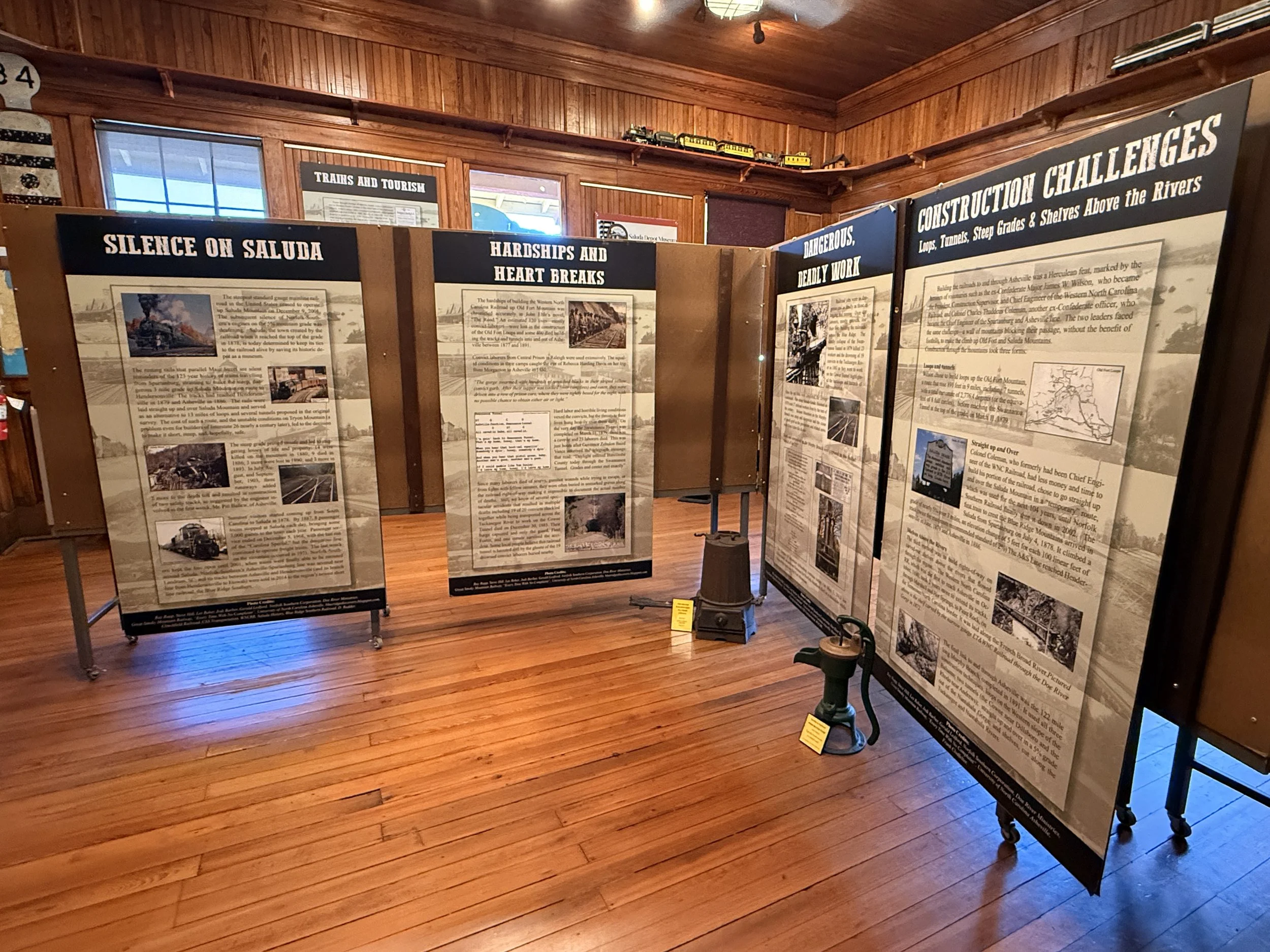
Through historic photographs, videos, narratives, and artifacts, visitors can follow the arrival of the railroads after the Civil War and learn about the people, labor, and risks involved in building rail lines through the rugged Appalachian Mountains. The exhibit explores the dramatic construction of the Old Fort and Clinchfield Loops, the dangers of operating trains on steep mountain terrain, and the human toll of railroad construction and operations.
How the Railroad Changed Saluda and Western North Carolina
The arrival of the railroads connected mountain communities with the outside world, bringing new opportunities and profound changes to the region. Rail lines extending from Spartanburg, Salisbury, and East Tennessee helped open Western North Carolina to commercial development, tourism, and industry.
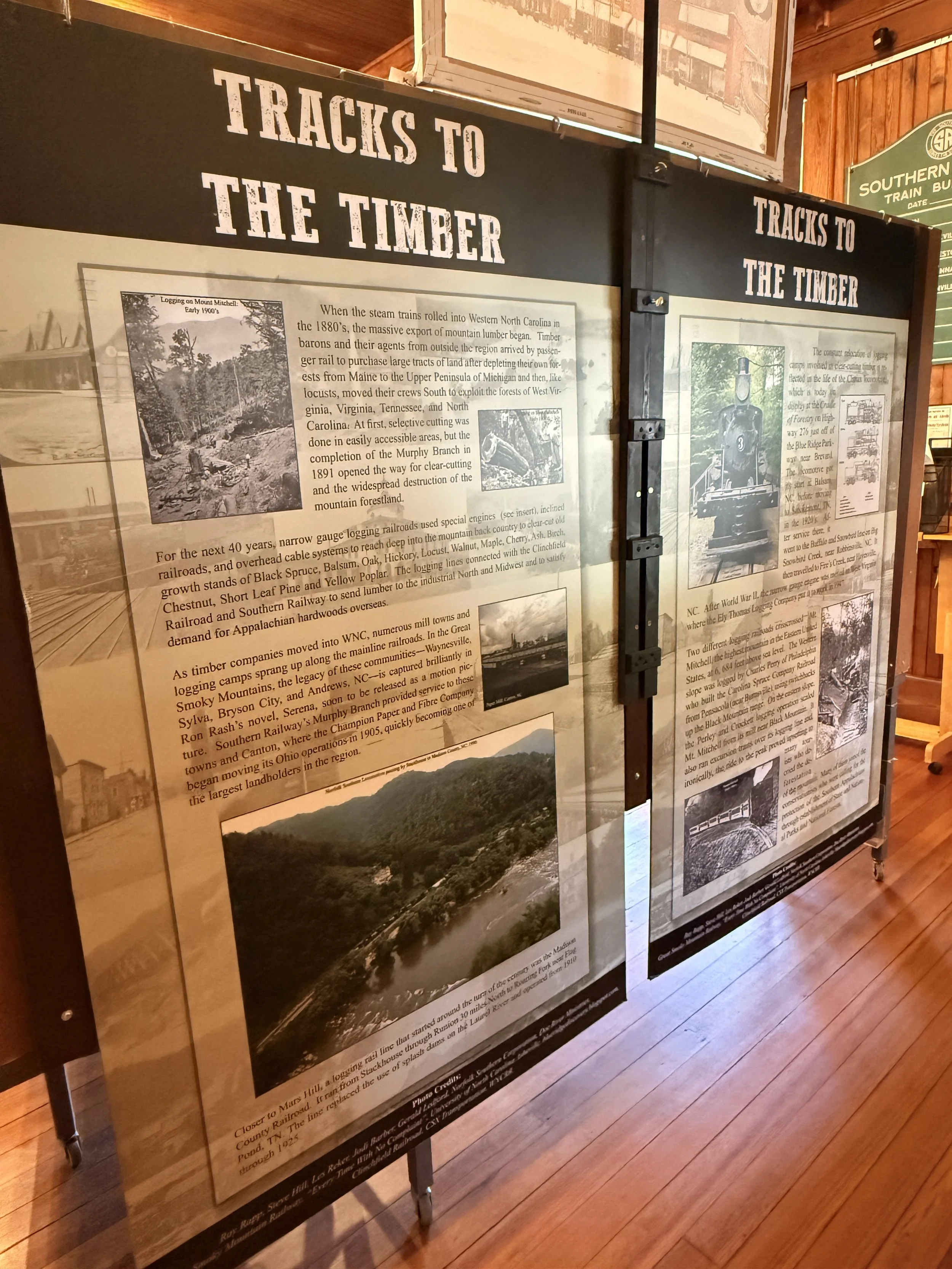
Railroads transported timber, minerals, and other natural resources out of the mountains, fueling mining and logging operations that dramatically altered the landscape. At the same time, trains brought visitors to the region, making the mountains more accessible to travelers seeking cooler summers, scenic views, and a retreat from city life.
From Railroad Town to Mountain Tourist Destination
The exhibit explores how railroad access helped transform communities along the tracks, including Saluda, Hendersonville, Asheville, Black Mountain, Hot Springs, and Waynesville. Historic photographs and interpretive displays illustrate the growth of mountain tourism and the arrival of prominent visitors, including George Washington Vanderbilt and his mother, who first visited Asheville in 1887.
In Saluda, the railroad became central to the town’s development and identity. The construction of the Saluda Grade, with its challenging mountain terrain, stands as a remarkable chapter in American railroad engineering and a defining part of Saluda’s history.
The Changing Era of Passenger Rail
The story continues through the decline of passenger train service and the efforts to explore its restoration in Western North Carolina. Visitors can also discover railroad terminology in the exhibit’s Slanguage section and learn about the tradition of calling passenger trains “varnish.”
From the early days of railroad construction to changing transportation needs and modern rail excursions, the exhibit traces the continuing connection between railroads and the communities they helped build.
Visit the Saluda Depot Museum in Saluda, NC, to explore the history of the Saluda Grade and discover how the railroad shaped the people, places, and traditions of Western North Carolina. Admission is always free, and voluntary donations are appreciated.