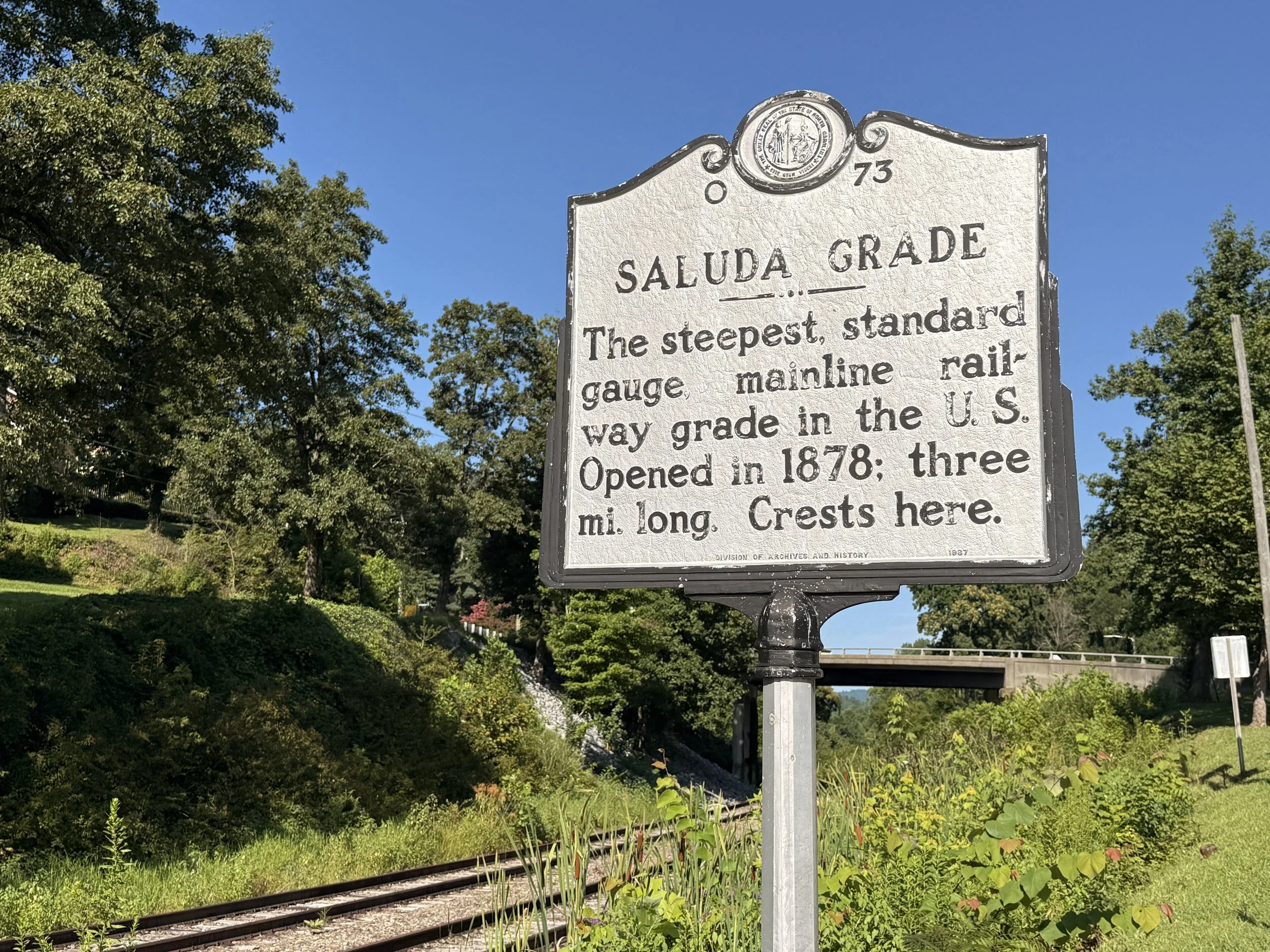
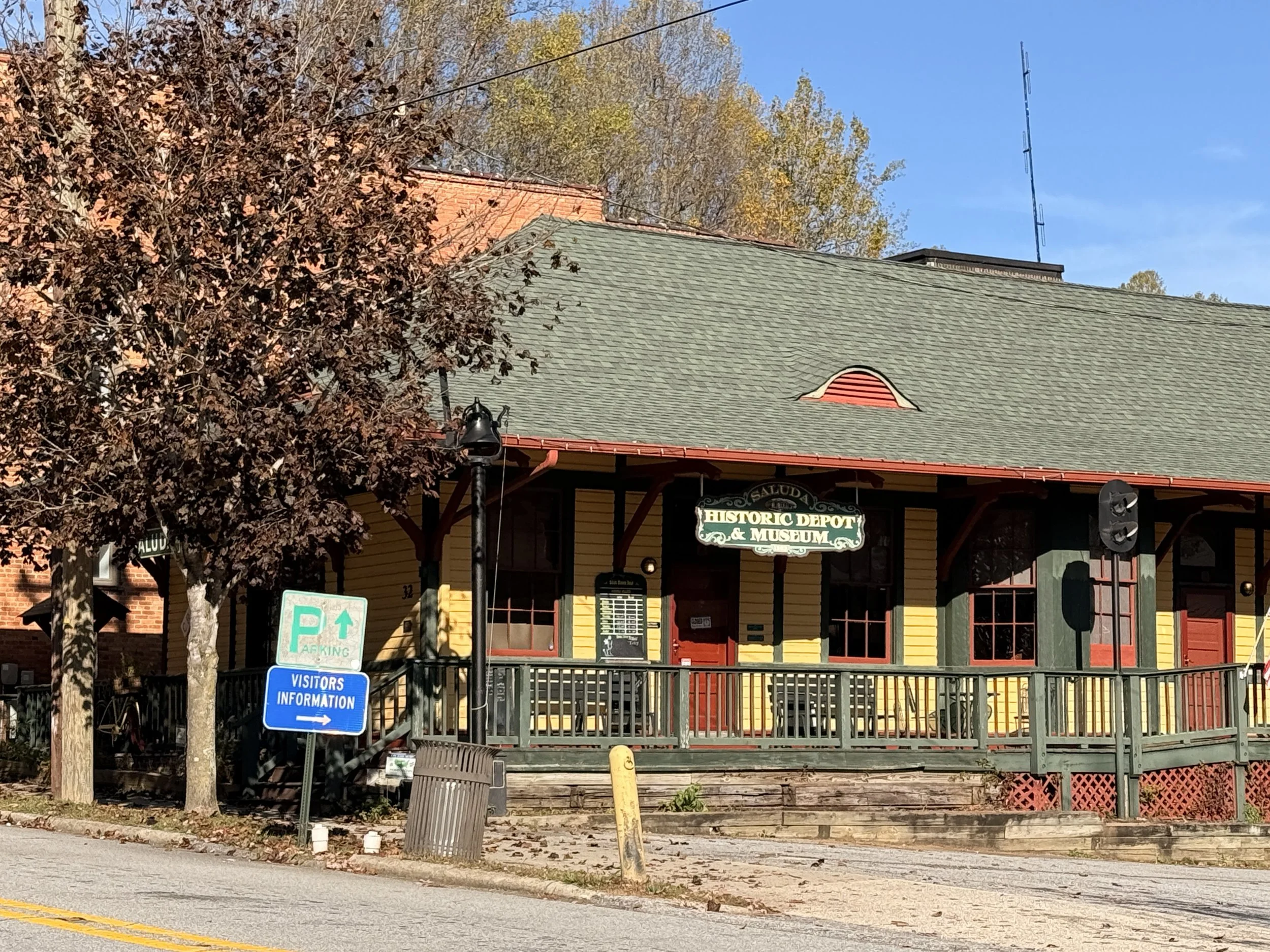
The History of the Saluda Grade
A Railroad through the mountains
The Saluda Grade, located along the former Southern Railway line over Pace's Gap, is one of the most remarkable engineering achievements in American railroad history. It was part of a rail corridor connecting Spartanburg, South Carolina, with Asheville, North Carolina, and is now associated with Norfolk Southern's Carolina Division, which extends from Charleston, South Carolina, to Asheville. Along the way, the route travels through a dramatic range of landscapes, from the Atlantic coastal region to some of the tallest mountains in the eastern United States.
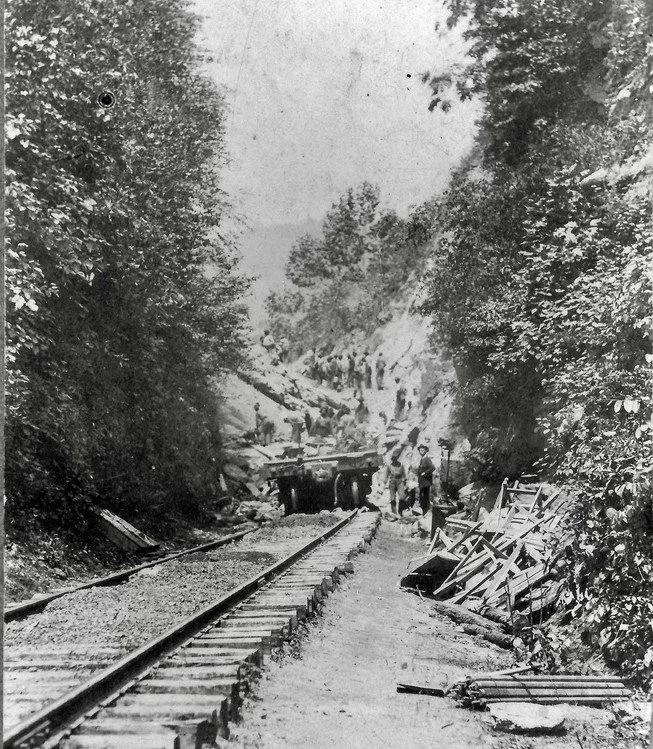
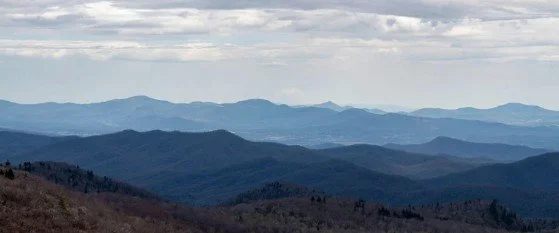
Looking north from the rolling hills of Landrum, South Carolina, the challenge facing railroad engineers becomes clear. Between Tryon and Saluda, a steep wall of mountains rises abruptly, leaving little opportunity to follow the gradual two- to three-percent grades typically preferred for railroad construction.
The original railroad survey proposed a route that would wind through approximately 13 miles of loops and several tunnels to cross the mountains. However, the considerable expense of that construction, combined with unstable ground conditions on Tryon Mountain, made the proposed route impractical. These same challenging geological conditions would present difficulties nearly a century later during the construction of Interstate 26.
Building the Saluda Grade (1875–1879)
In 1875, Colonel Thaddeus Coleman and Captain Charles Pearson were tasked with building a railroad from Tryon to Asheville for the Spartanburg & Asheville Railroad Company. With the alternative routes eliminated by engineering challenges and financial limitations, the decision was made to build a shorter, more direct route straight up and over the mountain.
The resulting route became known as the Saluda Grade. Beginning near the bridge over the Pacolet River and Pearson Falls Road in Melrose, the grade climbs approximately three miles before reaching Saluda, North Carolina.
With a sustained five-percent incline, the Saluda Grade became the steepest standard-gauge mainline railroad grade in the United States. Its extraordinary steepness presented significant challenges for the locomotives, railroad crews, and equipment traveling over the mountain.
The tracks reached Hendersonville in 1879, opening the way for rail travel into the mountain communities. The line was subsequently extended to Asheville in 1886.
Saluda Becomes a Mountain Destination (1878–1887)
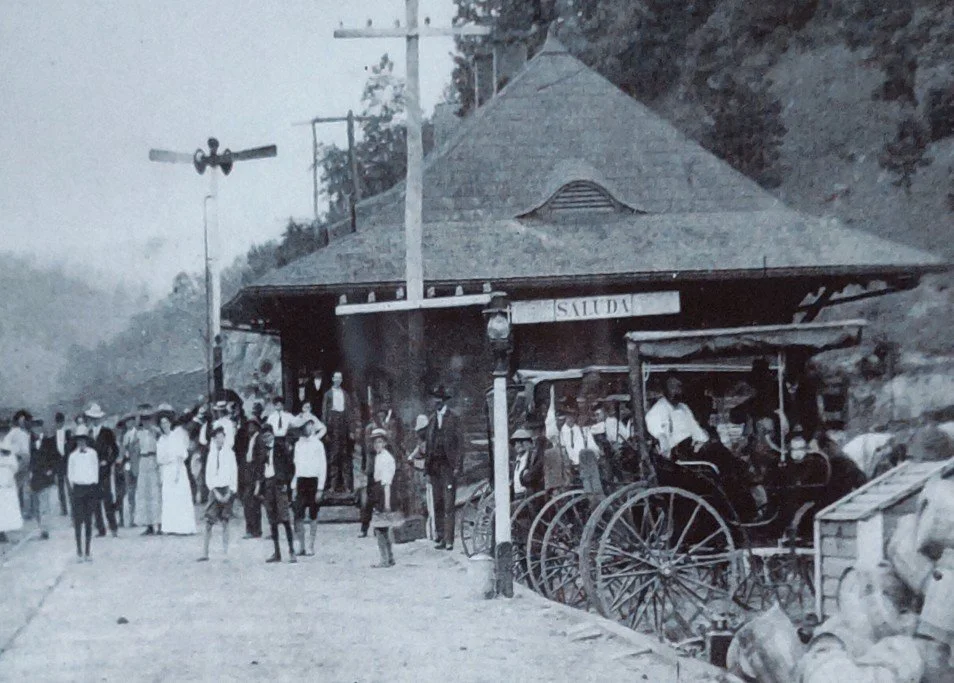
The arrival of the railroad brought more than transportation to Saluda. It also opened the mountain community to summer visitors seeking relief from the heat of the South Carolina lowlands.
Visitors began traveling by train from South Carolina to Saluda in 1878. The convenient rail connection helped establish the town as a popular summer destination.
By 1887, eight passenger trains stopped in Saluda each day, bringing approximately 3,000 visitors to the community annually. The railroad quickly became an important part of Saluda's economy and its identity as a mountain resort town.
The Dangers of the Descent (1880–1903)
While climbing the Saluda Grade was difficult, traveling downhill could be even more dangerous. Controlling a heavy train on a five-percent descent was a constant challenge. If a train began to run away and its brakes could no longer hold it, the crew faced the terrifying possibility of an inevitable crash. The consequences were devastating.
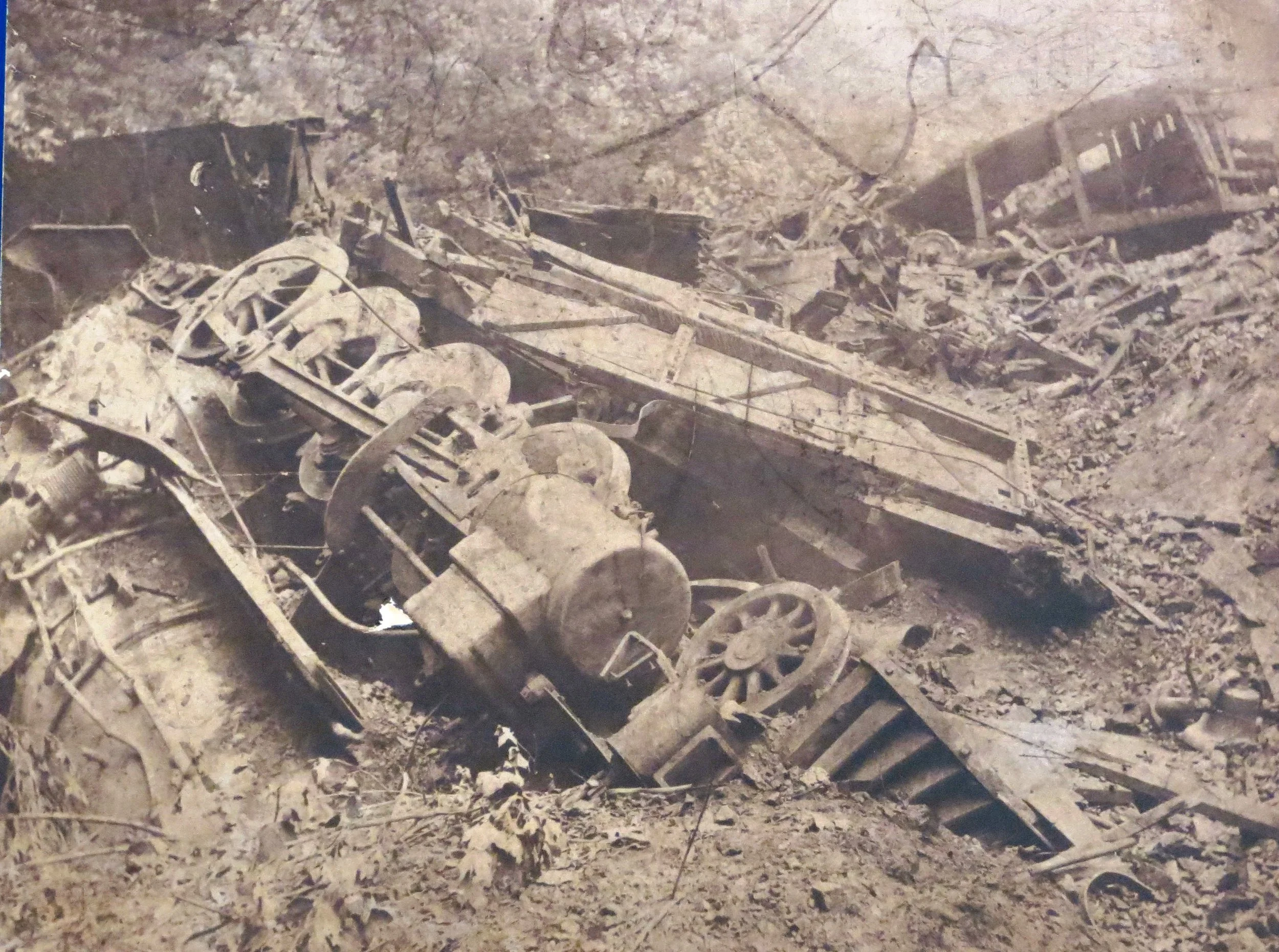
Between 1880 and 1903, a series of runaway train accidents claimed numerous lives:
1880: Fourteen men were killed in accidents on the mountain.
1886: Nine additional lives were lost.
1890: Three more fatalities occurred.
1893: Three additional men were killed.
1903: Three runaway incidents during July, August, and September added two more deaths to the toll.
Railroad employees often remained aboard runaway trains, doing everything they could to regain control and prevent disaster. Tragically, those who stayed behind to save the train were frequently the ones who lost their lives.
A Life-Saving Invention: The Safety Tracks of 1903
The three runaway incidents in the summer of 1903 brought renewed urgency to the need for additional safety measures.
During the first of these accidents, Asheville engineer Pitt Ballew jumped from his runaway train just before it crashed, breaking his back in the process. While recovering in an Asheville hospital, Ballew developed an idea that would ultimately change railroad safety on the mountain. He proposed constructing safety tracks just before each of the two sharp curves along the grade.
He presented his idea to the railroad superintendent, who agreed to have the tracks built.
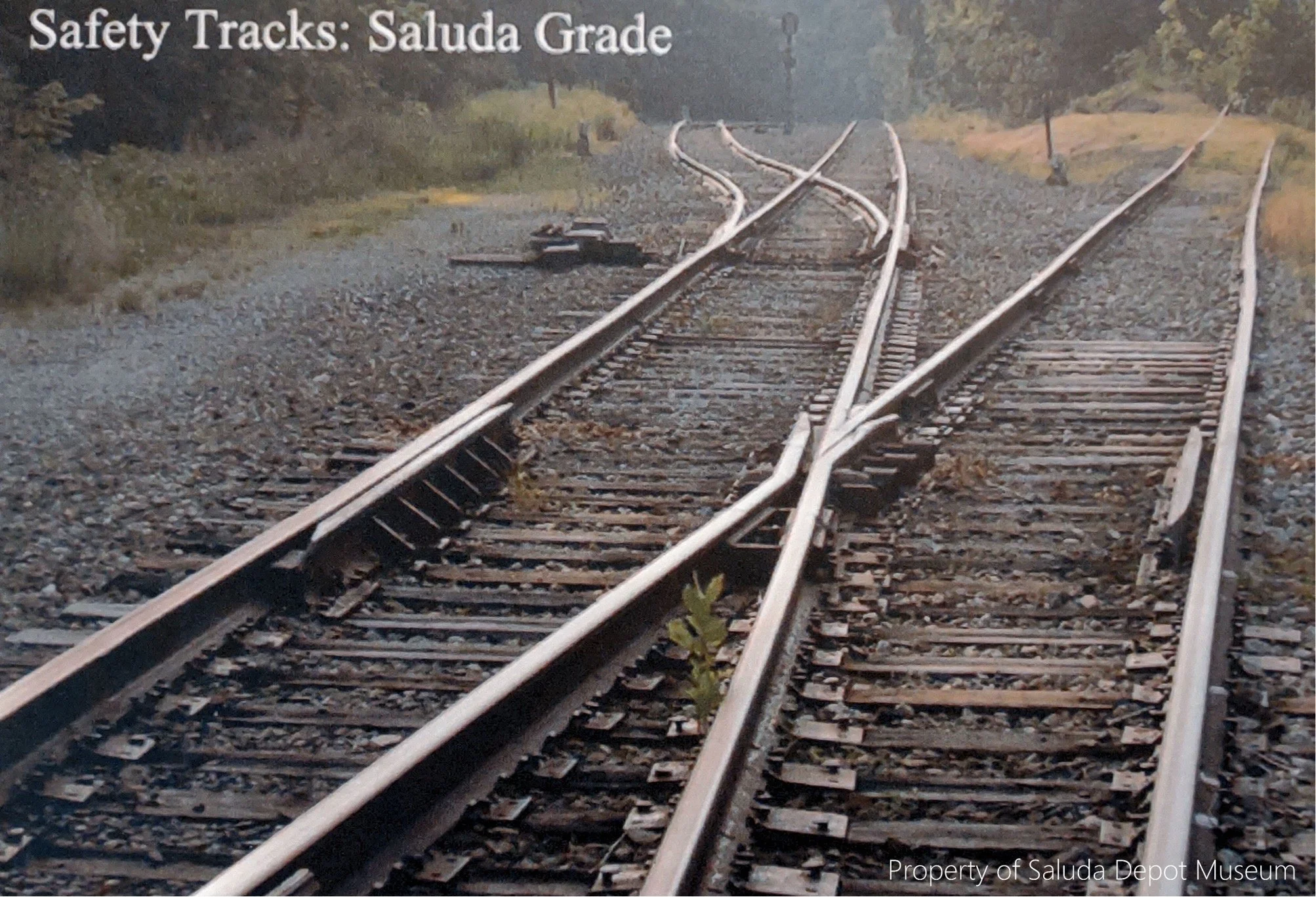
These specially designed safety tracks were approximately 1,000 feet long and featured a steep ten-percent uphill incline. Their purpose was to provide a last line of defense: if a train lost control while descending the mountain, it could be diverted onto the uphill track and brought to a stop before reaching the dangerous curves.
One of these safety tracks was located near Slaughter Pen Cut, just east of Melrose. It served as a final opportunity to stop a runaway train before it entered the sharp curve.
Following the introduction of the safety tracks, fatalities from runaway trains ceased, and the costly destruction of railroad equipment was significantly reduced.
Additional precautions were also introduced. Trains descending the grade were required to stop and reset the brake retainers on every railcar before continuing east. These devices helped maintain braking pressure and provided crews with greater control during the descent.
Restrictions were also placed on the use of interstate coal hopper cars, which had less effective braking systems. These cars could make up no more than 50 percent of a train traveling over the grade.
Changing Times: The End of Passenger Service (1968)
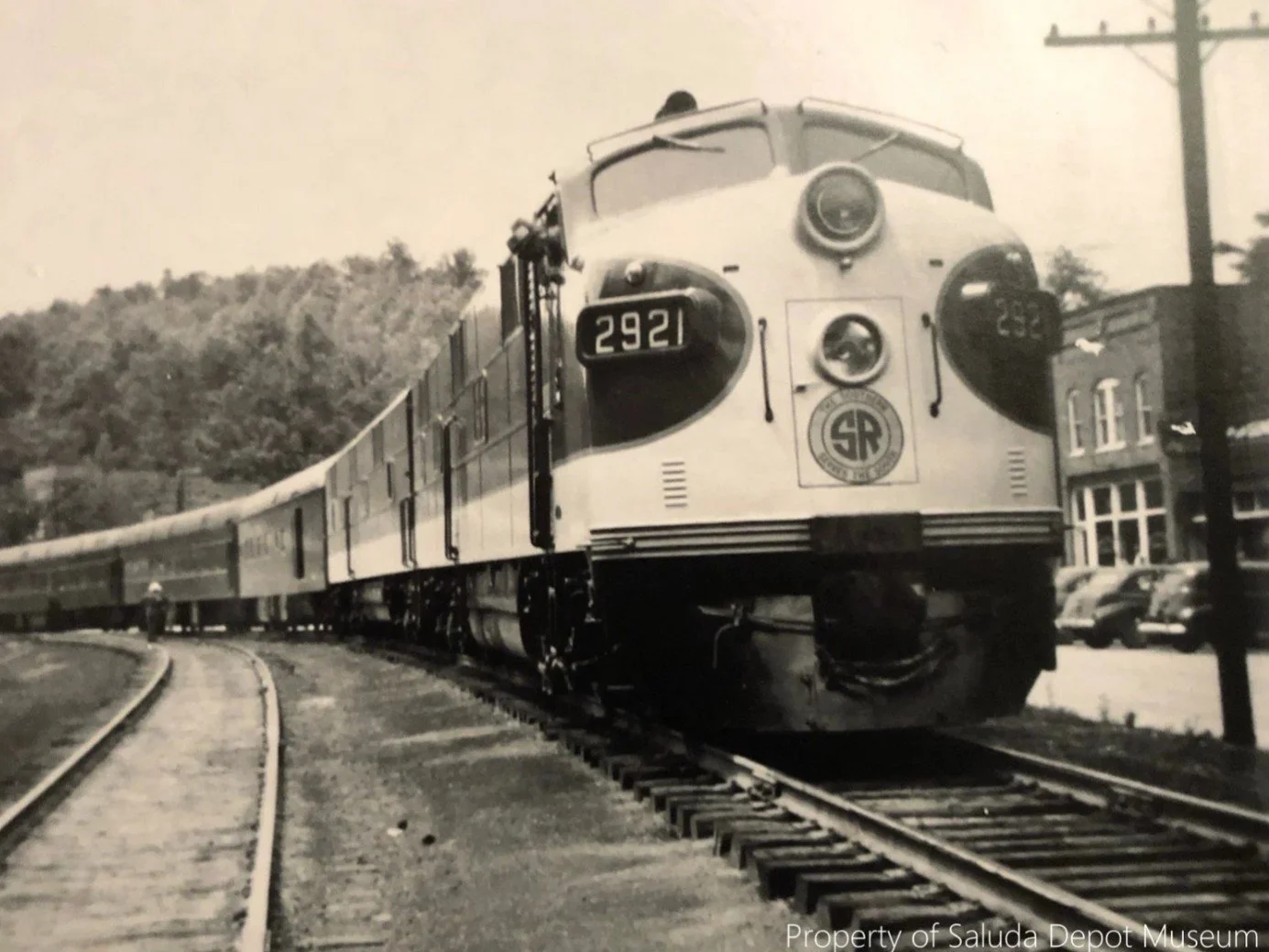
For decades, the Saluda Grade served both passenger and freight trains, connecting mountain communities with the larger cities and towns of the region. However, as transportation patterns changed, passenger rail service gradually declined.
On December 5, 1968, passenger service came to an end with the final run of the Carolina Special. Although passenger trains no longer traveled the mountain, the line remained an important freight route.
Freight trains continued making the challenging climb and descent, and railroad crews continued to rely on the safety procedures developed over the years. The last recorded train wreck on the mountain occurred in 1971, but freight operations continued for another 30 years.
The Final Train: Closure of the Saluda Grade (2001)
On December 9, 2001, the Saluda Grade officially ceased railroad operations. After 123 years of trains making the difficult journey between Spartanburg and Asheville, the sound of Norfolk Southern locomotives climbing the mountain fell silent.
Advances in railroad operations and the ability to reroute trains around Saluda made it possible for Norfolk Southern to discontinue use of the steep mountain route. The decision marked the end of an extraordinary chapter in American railroad history.
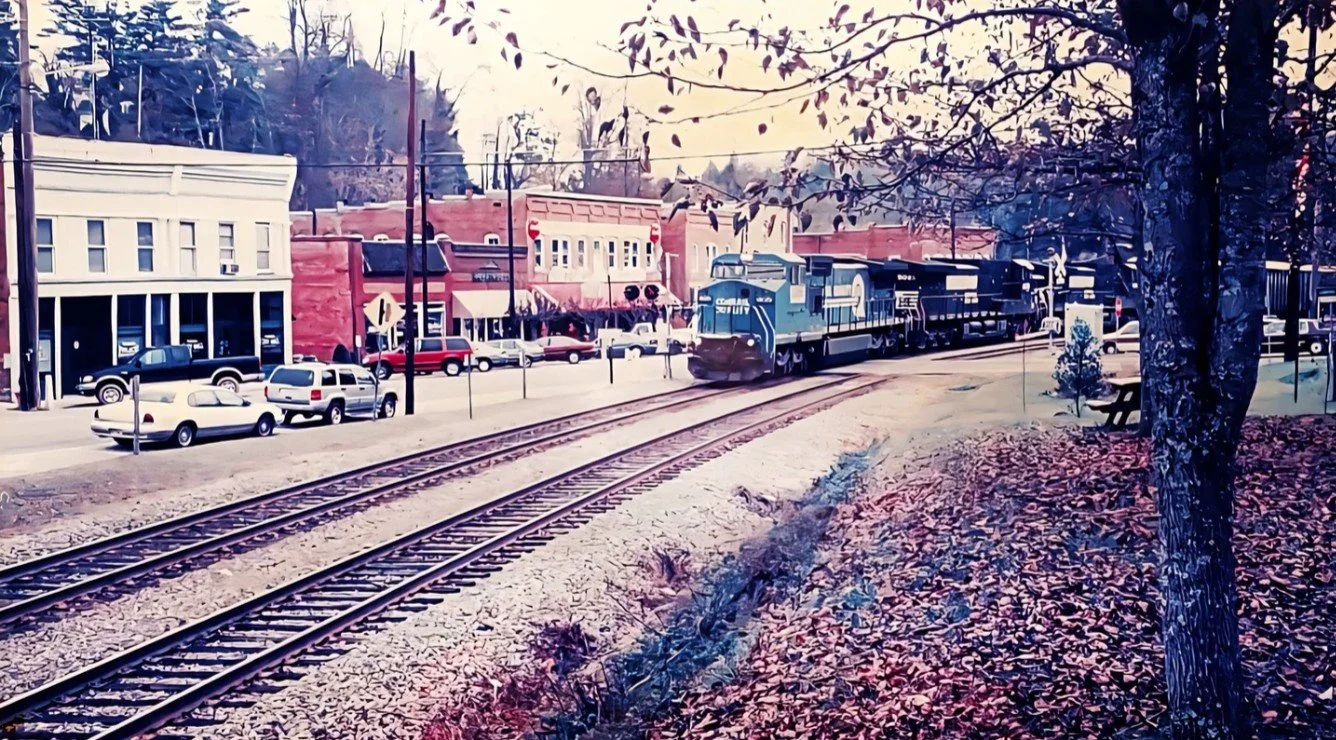
The rusting rails that parallel Main Street in Saluda remain a visible reminder of the railroad's important role in shaping the community. For generations, these tracks carried passengers, freight, and visitors into the mountains, while railroad employees faced the challenges of operating one of the most demanding stretches of mainline track in the country.
A New Chapter for the Railroad
Although the Saluda Grade remained out of service, other portions of the historic railroad corridor continued to serve the region.
In 2014, Norfolk Southern sold its tracks between Asheville and Hendersonville, along with the branch line connecting Hendersonville to Etowah, to the region's newest short-line railroad, Blue Ridge Southern Railroad.
The Saluda Grade itself remains a remarkable reminder of the determination, engineering ingenuity, and human sacrifice involved in building and operating a railroad through the mountains of Western North Carolina.
Today, the former railroad corridor is an important part of Saluda's heritage. Its story lives on through the Saluda Depot Museum, where visitors can explore the people, technology, and events that made the Saluda Grade such an extraordinary part of American railroad history.